

Are you feeling pain in your lower back, near the sacrum? Ok, we get it. You may not know what the “sacrum” is.
Where’s the sacrum? It’s a triangular-shaped bone at the base of the spine in your lower back. It connects your lower spine vertebrae to the tailbone – medically known as the “coccyx.” 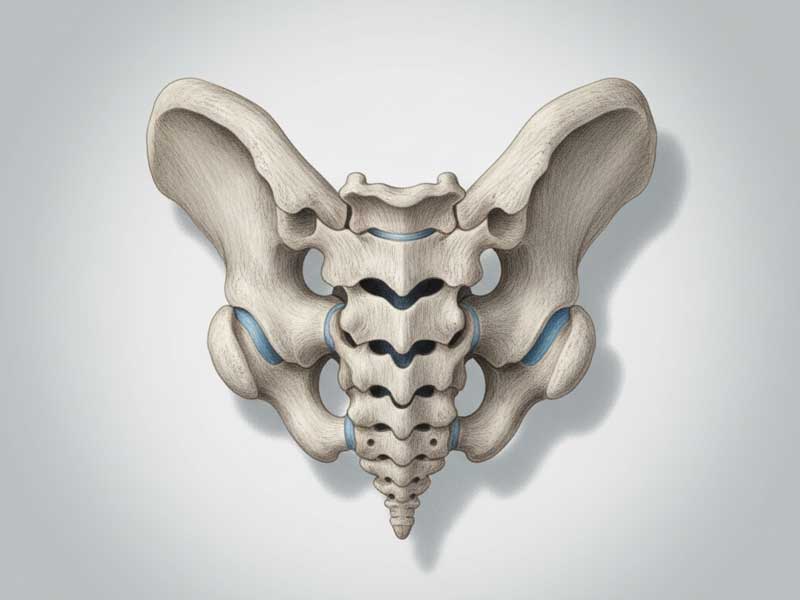
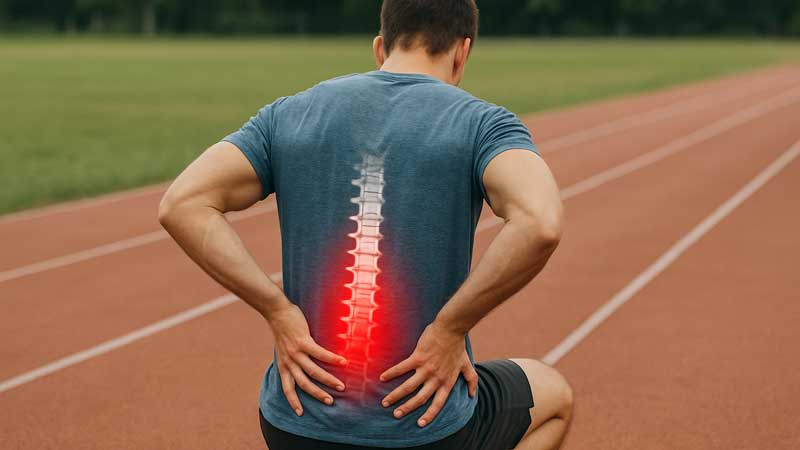
Are you having trouble putting weight on one leg? Are you experiencing lower back pain that worsens with activity, such as walking longer distances or climbing stairs? Do you have stiffness in the hips or lower back in the morning? These symptoms could be a sign of Sacroiliac (SI) joint pain.
SI joint pain is a common cause of low back pain, especially in young athletes. When addressed and managed, it is easily treatable. But if it is ignored, it can affect other structures in your body and potentially lead to more serious issues.
What Are the Sacroiliac Joints?
The sacroiliac (SI) joints, located on each side of the sacrum, attach to the hip bones. Their primary function is to carry the weight of your upper body when you stand or walk and shift that load to your legs via your hips.
They are synovial joints, which are a type of joint that allows for smooth, flexible movement between two bones. They do move, but only within a minimal range. They can move slightly forward or backward, sideways, and rotate.
They are essential as they provide shock absorption during activities such as walking and running, stability for the pelvis and lower spine, and help maintain proper pelvic alignment.
What Causes Sacroiliac (SI) Joint Pain?
Sacroiliac (SI) Joint Pain can be the result of a weakness in the muscles that stabilize the joint, like the glutes, hip flexors, and abdominals. Other issues can include:
- Injury or Trauma: Injuries from blunt force trauma, such as when an athlete falls backward and lands on their tailbone.
- Repetitive Stress: Activities like running, heavy lifting, or twisting can overload the joint. And conditions or habits that affect how you walk, which change your gait, can load your sacroiliac joints unevenly, leading to pain.
- Leg Length Differences: If your legs are different lengths, it can lead to uneven pressure that alters joint mechanics.
- Arthritis: Wear-and-tear arthritis, also known as osteoarthritis, can occur in sacroiliac joints.
- Pregnancy: During pregnancy, the sacroiliac (SI) joints can become inflamed due to their increased mobility.
- Infection: Although rare, a sacroiliac joint can become infected.
- Spinal Surgery: Lumbar fusion can increase stress on the SI joint.
What Are the Options for SI Joint Treatment?
The good news is that SI joint pain treatment is highly effective, especially when started early.
Non-Surgical SI Joint Treatments
- Physical therapy: Physical therapy can be an effective treatment for SI joint pain by strengthening core and hip muscles, improving joint mobility and flexibility, and reducing inflammation.
- Medications: As a first step, your doctor might suggest that you try over-the-counter drugs called nonsteroidal anti-inflammatory drugs (NSAIDs), like ibuprofen or naproxen. They can reduce inflammation and pain.
- Sacroiliac belts: You might consider using a sacroiliac belt, which provides external support and stability. An SI Belt (or sacroiliac belt) supports your sacroiliac joint and limits movement in the joint to avoid pain from a destabilized joint and pelvis.
- Injections: Corticosteroid injections may be prescribed to decrease facet joint syndrome inflammation and irritation.
- Radiofrequency ablation: Your doctor may also perform a radiofrequency ablation, which is a minimally invasive procedure that uses radiofrequency energy to destroy the nerves responsible for SI joint pain.
- Lifestyle changes: Avoiding triggers, improving posture, and correcting leg length differences. Lifestyle changes for SI joint pain include avoiding activities that trigger your pain, improving your posture, engaging in regular low-impact exercises such as walking or swimming, strengthening core and hip muscles, practicing proper lifting techniques, maintaining a healthy weight, and wearing supportive footwear. An anti-inflammatory diet and supportive pillows for sitting and sleeping can also help reduce pain and inflammation.
Surgical SI Joint Treatment
If conservative care fails, SI joint fusion may be recommended. This procedure permanently joins the bones in your sacroiliac joint together. It stabilizes the joint with implants or bone grafts and has shown good long-term success in reducing pain.
How Can You Prevent Sacroiliac Joint Pain?
You can lower your risk of SI joint problems with a few proactive steps:
- Maintain Good Posture: Avoid slouching or hunching over; keep your spine straight and your shoulders relaxed; and use a supportive chair and pillow.
- Strengthen Core and Hip Muscles: Exercise and strengthen your core and glutes for better pelvic stability.
- Avoid High-Impact Activities: Limit activities that put excessive stress on the SI joints, such as running, jumping, and heavy lifting. And if you do engage in these activities, warm up and use proper form.
- Stretch Regularly and Avoid Prolonged Sitting: Take breaks to get up and move around. Stretch the muscles surrounding the SI joints, including the hamstrings, glutes, and lower back.
- Use Heat or Ice: Apply heat or ice packs to the affected area for 15-20 minutes at a time. This can help reduce inflammation and pain.
- Wear Support Shoes and Use Orthotics if Appropriate: Supportive shoes will help reduce uneven strain. If you have differences in your leg length, consider using orthotics to compensate.
- Consider Physical Therapy: A physical therapist can guide you through exercises, stretches, and techniques that are designed explicitly for SI joint pain.
When Should You Consult a Doctor for Low Back Pain?
If your low back pain persists or worsens with specific movements, or if it radiates into your hips or thighs, it’s time to consult a healthcare professional. Early diagnosis of SI joint dysfunction can prevent long-term complications and improve the quality of your life.
Conclusion: Is the SI Joint the Hidden Source of Your Low Back Pain?
While disc herniations and muscle strain often get the blame, the sacroiliac joint may actually be the root cause of your low back pain. Because symptoms frequently overlap with other spinal conditions, many people struggle with years of discomfort before getting the correct diagnosis.
Fortunately, with accurate testing and a combination of physical therapy, lifestyle modifications, and, in some cases, surgery, SI joint pain can be effectively managed. If you’ve been living with stubborn low back pain, it may be worth asking your doctor: “Could my sacroiliac joint be the problem?”