

Minimally invasive surgical (MIS) techniques have revolutionized modern medicine, offering patients shorter recovery times, reduced scarring, and fewer complications than traditional open surgeries. In Physical Medicine and Rehabilitation, as well as in Orthopedics, it continues to expand the range of outpatient procedures that improve patients’ quality of life.
At the heart of these advanced procedures are imaging technologies, which play a crucial role in planning, guiding, and evaluating surgical interventions. This article examines the role of imaging in minimally invasive surgery, the techniques employed, and how these technologies improve patient outcomes.
Understanding Minimally Invasive Surgery
Minimally invasive surgery refers to surgical procedures performed through small incisions using specialized instruments and technology. Unlike traditional surgery, which requires larger incisions, minimally invasive surgery uses smaller cuts, often only a few millimeters wide. This approach significantly minimizes tissue damage, reduces blood loss, and shortens recovery times.
Examples of minimally invasive surgery include Intracept (spinal endplate basivertebral nerve ablation), minimally invasive lumbar decompression (MILD; removal of thickened spinal ligament), and radiofrequency ablation (disabling nerves sending pain signals). All of which rely heavily on imaging techniques for safe and effective implementation.
Types of Imaging in Minimally Invasive Surgery
Preoperative Imaging:
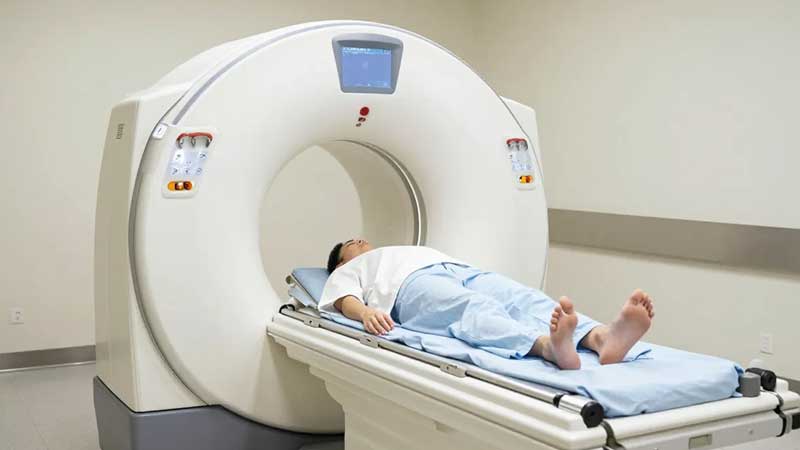
Before some surgical procedures, imaging is essential for proper planning. Techniques such as computed tomography (CT), magnetic resonance imaging (MRI), and ultrasound are used to visualize the anatomy of the affected area. These imaging modalities allow physicians to pinpoint pain generators, assess spinal alignment, identify nerve compression, and detect abnormalities such as degenerated discs.
For instance, when evaluating whether the Intracept procedure is appropriate for a patient, a preoperative MRI scan provides detailed information on Modic Type 1 or Type 2 changes in vertebral endplates adjacent to a dehydrated disc. If imaging shows inflammation and fluid (Type 1) or fat replacement (Type 2), it confirms vertebrogenic pain, and the patient is a good candidate for Intracept.
Intraoperative Imaging:
During outpatient surgery, real-time imaging is indispensable for guiding instruments and confirming that procedures are being performed accurately. Techniques such as fluoroscopy and intraoperative ultrasound are used to provide physicians with real-time visualization of the target area during the procedure.
For example, during an Intracept procedure, fluoroscopy is used to guide instruments inserted through a very small incision in a patient’s back. This enables a physician to precisely target the basivertebral nerve that is transmitting pain signals.
Postoperative Imaging:
After surgery, imaging may be appropriate to evaluate the procedure’s success and to monitor the healing process. Follow-up imaging may employ perioperative modalities, such as CT or MRI, to detect complications, including infections, bleeding, and fluid collections.
In some cases, postoperative imaging can reveal unexpected issues that were not apparent during surgery, enabling timely intervention if required.
Advantages of Imaging in Minimally Invasive Surgery
Enhanced Visualization:
Imaging systems provide high-resolution images that enhance the physician’s visual field beyond what is visible to the naked eye. Fluoroscopy, for instance, in outpatient spine surgery provides magnified views of internal structures, enabling more precise interventions.
Increased Accuracy:
With the aid of real-time imaging, physicians can perform procedures with higher accuracy and precision. This capability is especially crucial in delicate surgeries, where slight miscalculations can have significant consequences.
Reduced Complications:
The use of imaging reduces the risk of complications. By providing clear anatomical data and guidance, imaging helps minimize damage to healthy tissues and enhances surgical safety. This advantage ultimately contributes to lower rates of surgical complications and quicker postoperative recovery.
Less Invasive Procedures:
The ability to visualize internal structures through imaging allows many procedures to be performed without traditional open surgical methods. Physicians can perform many surgeries under fluoroscopic guidance, which significantly benefits patients.
Challenges and Future Directions
Despite the clear benefits, integrating imaging into minimally invasive procedures presents challenges. The cost of advanced imaging technologies can be prohibitive, and the complexity of integrating these systems into surgical workflows requires training and expertise.
Looking ahead, research and development continue to advance imaging modalities, enhancing capabilities while minimizing risks. Innovations such as augmented reality (AR) and virtual reality (VR) are being explored to improve surgical planning and enhance visualization during surgery. Furthermore, artificial intelligence (AI) is poised to revolutionize the interpretation of imaging data, further assisting physicians in making informed decisions during procedures.
Wrapping It Up
Imaging plays an indispensable role in minimally invasive surgical procedures, serving as a cornerstone for successful interventions. By providing detailed preoperative assessments, real-time intraoperative guidance, and postoperative evaluations, imaging technologies facilitate safer, more accurate, and effective surgeries.
As technology continues to evolve, the integration of advanced imaging systems will likely enhance the practice of minimally invasive surgery, ultimately improving patient outcomes and expanding the possibilities of surgical interventions. The future of surgery, with imaging at its core, promises to be not only more effective but also more attuned to the complexities of human anatomy.