

You spend the weekend enjoying a round of golf on Saturday, followed by a tennis match on Sunday. You also find time for yard work, and you squeeze in a run or two, enjoying the spectacular weather.
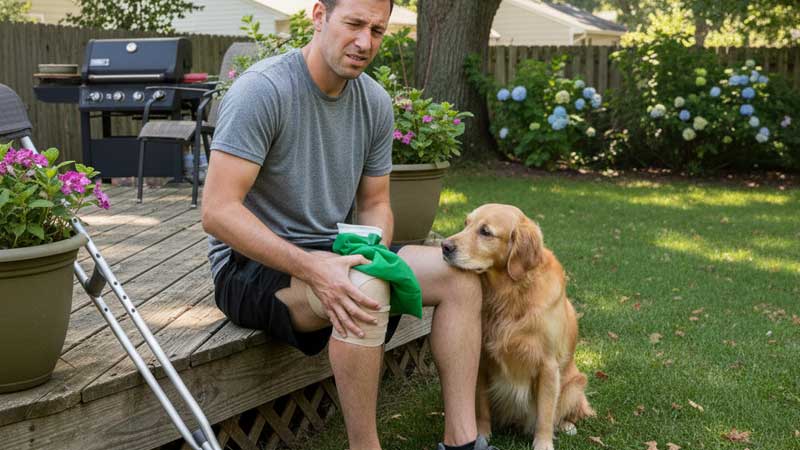
As you rise on Monday morning, you are greeted with achy knees. Achy knees? Why, as a young adult, are you experiencing achy knees?
A study published in June 2025 in Osteoarthritis and Cartilage revealed that more than half of participants as young as 30 showed early signs of joint damage. These were revealed in MRI scans, often without symptoms.
Additional research has shown that there are two primary reasons behind this troubling trend among those in their 30s and 40s: rising obesity rates and a greater tendency to play high-intensity sports.
The risk is that without lifestyle adjustments, more young people may end up experiencing even more painful conditions – or even premature knee replacement.
What Did This Research Study Show About Knee Pain for Those in Their 30s and 40s?
The research study was conducted by the University of Oulu in Finland. Participants were part of an established group of individuals born in the same year. These individuals received a comprehensive health examination, provided blood samples, and underwent an MRI (magnetic resonance imaging) scan of their knees. The average age was 33.7 years.
More than 50% of the group had minor cartilage damage in their knees, despite their young ages. Cartilage defects were also found in the joint between the shinbone and thighbone for about a quarter of the participants. Additionally, small bone spurs were detected in more than half of the group.
The researchers linked a high BMI (body mass index) as the most obvious contributing factor to their findings.
How Does Excess Weight Impact Your Knees?
When you walk, the biomechanical impact on your knees is 3 to 4 times your body weight. Excess weight increases this impact and accelerates wear and tear on the joint.
With this added strain, your cartilage can break down, often resulting in chronic pain. And once that cartilage is gone, it cannot be replaced.
These changes are not inevitable. Some individuals reach their 90s with no evidence of knee problems.
What Changes in Your Knees Might Occur Before the Onset of Osteoarthritis?
For most of us, osteoarthritis typically begins to develop in our 50s and 60s.
Osteoarthritis occurs when the protective cartilage that cushions the ends of our bones gradually breaks down over time, causing the bones to rub against each other. It can cause pain due to disc degeneration, bone spurs, and spinal stenosis. Simple, everyday movements can hurt.
However, changes in the tissues in and around your knee can begin long before the onset of osteoarthritis. Muscle mass decreases approximately 3–8% per decade after the age of 30, and this rate of decline is even higher after the age of 60.
Over the same period, the ligaments and tendons that hold your knee joint together also tend to tighten and stiffen with age. This can compress the joint, leading to pain or swelling.
Sometimes, these age-related changes can affect other joints, including our hips. In fact, sometimes the pain we think is in our knees actually originates higher up, with a hip issue potentially contributing to the problem.
Sports Injuries Can Add to the Risk
In the United States, many middle-aged individuals continue to play sports with the same intensity they followed in high school or college. This can lead to significant knee injuries, which, even if treated, tend to worsen with age.
Maintaining a healthy weight is the most effective step to reduce the risk of knee and other joint problems. Intensive activity during your free weekend, especially without preparation, can leave you vulnerable.
Strengthening the muscles around the knees, particularly the quadriceps (quads) and hamstrings, can provide additional support. Stretching before vigorous activity becomes increasingly critical as we enter our third decade of life.
Preventative Measures
The National Institutes of Health (NIH) notes that 74% of adults in the U.S. are overweight, which includes 43% who are considered obese. This trend has been steadily increasing since the beginning of this century.
Coupled with mid-life sports injuries, this is putting younger generations at risk for early joint damage and even knee replacements.
By adopting better habits and preventive measures now, individuals in their 30s and 40s can protect their knees and reduce the likelihood of serious problems later in life.
However, if you experience knee problems characterized by severe pain, persistent swelling, weakness, instability, difficulty bearing weight, or signs of infection, don’t delay visiting a doctor.